On this Pentecost Sunday, I am thinking about terrorism. The news of the morning was about another Islamist terror attack in London. I am reminded that God has not given us “a spirit not of fear but of power and love and self-control” (2 Timothy 1:7 ESV). Just as the earliest Christians boldly proclaimed the gospel in the midst of persecution, so too must we be bold in our gospel witness in the midst of terrorism.
When We Lose Faith
Visionaries and Dreamers
“It will come about after this that I will pour out My Spirit on all mankind; and your sons and daughters will prophesy, your old men will dream dreams, your young men will see visions” (Joel 2:28).
I must admit frustration. I often hear that my generation needs to move aside and make way for the millennials. I’m told that I’m a dreamer and the millennials are visionaries. I guess that means I’m tired and sleepy? Certainly not!
Pentecostal Mission: From Pentecost to Parousia
Several years ago, I accepted the pastorate of a Church of God congregation of about 120 people in a city of about 8000 people. The church was over fifty years old. Soon after settling in as the new pastor I attended the local ministerial association and introduced myself as the new pastor at the Church of God. One of the members gave me a surprised glance and exclaimed, “Church of God! I didn’t know there was one of those churches in this town!” A few years later, I was invited to preach at a Church of God congregation of about 140 people in a small Georgia town of about 2000. The congregation had been established in that city for more than sixty years. As I drove into the town, I stopped at a local store to buy gasoline. While paying for my purchase, I asked, “Can you give me directions to the Church of God?” After several seconds the clerk replied, “Sir, I’ve lived here all my life, but I don’t know where that church is located.” Of course these stories are anecdotal, but they serve to illustrate a very troubling fact; that is, too many of our local churches do not have a meaningful presence in their community.
Continue reading “Pentecostal Mission: From Pentecost to Parousia”
“Tongues as of Fire”
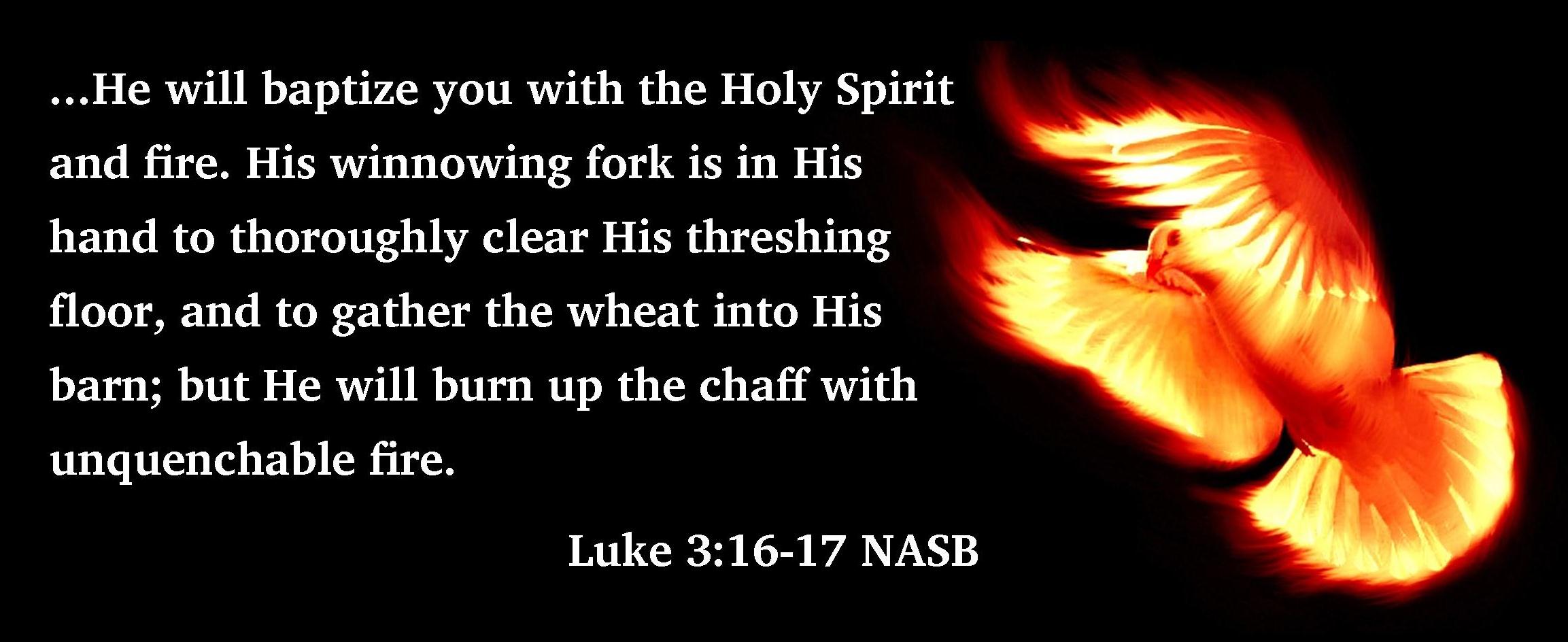
When the day of Pentecost had come, they were all together in one place. And suddenly there came from heaven a noise like a violent rushing wind, and it filled the whole house where they were sitting. And there appeared to them tongues as of fire distributing themselves, and they rested on each one of them. And they were all filled with the Holy Spirit and began to speak with other tongues, as the Spirit was giving them utterance (Acts 2:1-4).
The images of Pentecost are not unique to the Jerusalem Pentecost event. As I demonstrated in the previous post, the violent rushing wind reflect the ruach/pneuma of God – Spirit, breath, wind – throughout the Old Testament. Likewise, the “tongues as of fire” reflect various theophanic images in the Old Testament.
A Violent Rushing Wind
When the day of Pentecost had come, they were all together in one place. And suddenly there came from heaven a noise like a violent rushing wind, and it filled the whole house where they were sitting. And there appeared to them tongues as of fire distributing themselves, and they rested on each one of them. And they were all filled with the Holy Spirit and began to speak with other tongues, as the Spirit was giving them utterance (Acts 2:1-4).
We don’t usually associate the word violent with Holy Spirit’s activity. We prefer peace and serenity. But Luke presents the Pentecost event as a wind-storm, or to be more precise – a Spirit-storm. The Hebrew word ruach, and the Greek word pneuma, are translated throughout the Scriptures as wind, breath, or spirit. This reflects movement, life, power, and mystery. It may also be that ruach and pneuma suggest a relationship between the Holy Spirit, the breath of life, and the power of nature.
The Spirit and the Fire
The people of Israel were a people expecting deliverance from Roman domination. They desperately wanted to be free from Roman soldiers, Roman taxes, and Roman culture. As God had redeemed their ancestors from Egypt and Babylon, they now placed their hope in a new deliverer, a messiah that would embody Moses, Joshua, and David.