
There are three great holy events to be observed in Christian worship – Christmas, Easter, and Pentecost. Christmas is the celebration of the incarnation and birth of Jesus Christ, the son of Mary and the Son of God. Easter is the culmination of Holy Week – the time when Christians around the world celebrate the resurrection of Jesus Christ. Pentecost is the celebration of the outpouring of the Holy Spirit. While Christmas and Easter are celebrated with decorations, singing, and worship; Pentecost is often given little attention – even among Pentecostals. Christian pastors and worship leaders should step up and give Pentecost its well-deserved party.
Robert Webber has written,
Pentecost Sunday is an end and a beginning. It is the culmination of the season of Easter. It is the day when the church senses the all-pervasive power of Easter as the Spirit is unleashed on Creation. It is also the dawn of a new day in the life of the church. For as the church is empowered by the Spirit, the message of the risen Lord is trumpeted around the world. (The Services of the Christian Year, 1994).
So how should Pentecost be celebrated? First, the observance should begin on Ascension Day – the day the risen Christ ascended into Heaven. According to Luke, the last words of Jesus were “you will receive power when the Holy Spirit has come upon you; and you shall be My witnesses both in Jerusalem, and in all Judea and Samaria, and even to the end of the earth” (Acts 1:8 LSB). Then Jesus was “lifted up” into heaven to take his rightful place at the right hand of the Father. On Pentecost Sunday, sitting at the right hand of the Father, Jesus poured out the Spirit upon his disciples (Acts 2:33). From Ascension Day to Pentecost Sunday is ten days. During these ten days, the disciples of Jesus – men and women – were gathered in the Upper Room “continually devoting themselves to prayer” (Acts 1:14 LSB). The celebration of Pentecost is preceded by ten days of prayer in anticipation of the outpouring of the Spirit. The pastor, or worship leader, can designate a specific time and place for worshipers to gather and pray. Or, the pastor can encourage a time of family prayer.
The liturgical color for Pentecost is red – representing the fire of the Holy Spirit. During the Christmas season, churches are decorated with green trees, lights, candles, colorful ornaments, and red poinsettias. During Easter, churches are decorated with white Easter lilies. Also, the cross is draped with a white sheet, representing the empty burial clothes of Jesus. For Pentecost Sunday, the church is to be decorated in red. Worshipers are encouraged to dress in various shades of red and orange representing the flames of Pentecost – being “clothed with power from on high” (Luke 24:49 LSB).
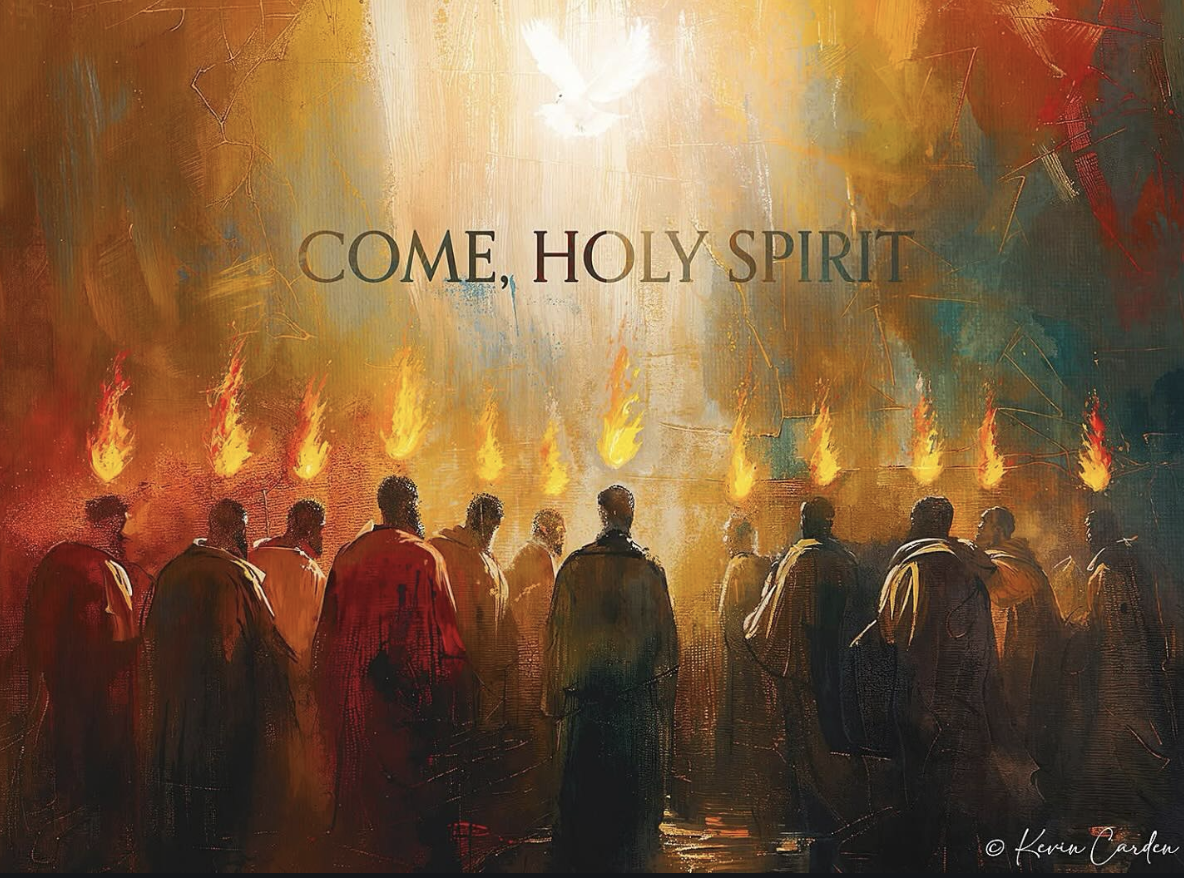
On the day of Pentecost the arrival of the Spirit was announced by a heavenly sound – “a noise like a violent rushing wind” (Acts 2:2 LSB). To symbolize the rushing wind of the Spirit, the call to worship for Pentecost Sunday might be an ensemble of wind instruments – trumpets, trombones, saxophones, flutes, and horns of all kinds – playing a joyful prelude/overture declaring the outpouring of God’s spirit. This could be a live ensemble or recorded music.
After the musical call to worship, the pastor or worship leader reads the biblical narrative of Pentecost – Acts 2:1- 12. Then the congregation sings songs that glorify the Spirit of God. The Holy Spirit is God and is to be equally glorified and worshiped with the Father and Son. The songs of Pentecost should be traditional and contemporary – remembering the past while anticipating the future. Singing is to be offered as a declaration of faith, prayers for divine fullness, and testimonies of divine encounter. The worship of Pentecost should lift the people of God into heavenly places. An old song declares, “Heaven came down and glory filled my soul!”
The sermon for Pentecost Sunday will tell the story of Pentecost and reflect upon the significance of the saving, sanctifying, and empowering work of the Holy Spirit in the life of the church. The goal of Pentecost worship is that the people of God will be baptized in the Holy Spirit at the altar of God; and that the mighty deeds of God should be proclaimed in other tongues as the Spirit gives the utterance (Acts 2:4, 11). Click here for a Pentecost sermon.
The celebration of Pentecost continues for several weeks. On the liturgical calendar, there are more than twenty Sundays after Pentecost. This is the longest season of the liturgical year. During the Sundays after Pentecost, the church is to be decorated in greenery and flowers signifying the life-giving power of the Spirit. The pastor plans messages from the book of Acts with emphasis on the work of the Spirit in the church. Also, the pastor could preach a series on the fruit of the Spirit (Galatians 5:22-23); the gifts of the Spirit (Romans 12:6-8; Corinthians 12-14); and the ministry gifts (Ephesians 4:11-13). A sermon series on the mission of God is appropriate. I once preached a series entitled “Walking in the Spirit” for thirteen weeks. Each Sunday morning, I wore a pair of red patent leather dress shoes to symbolize feet shod with the glory and power of the Spirit.
The advent of the Spirit is just as significant in human salvation as the advent of the Christ. Just as we celebrate Christmas and Easter, the people of God should sing and dance in great joy for the outpouring of the Holy Spirit.