The first candle of Advent signifies HOPE. As we light the candle of hope we are reminded of the faith of our ancestral fathers and mothers of the faith – the ancient patriarchs. About 4000 years ago God called Abram from the land of Iraq and said, “Go forth from your country, and from your relatives and from your father’s house, to the land which I will show you; and I will make you a great nation, and I will bless you, and make your name great; and so you shall be a blessing; and I will bless those who bless you, and the one who curses you I will curse. And in you all the families of the earth will be blessed” (Genesis 12:1-3).
The Christmas Propaganda War
The propaganda war rages as December 25 grows near. How should we celebrate? What is the role of the civil religion? Should this seasonal holiday be secular, pagan, or Christian? No, I’m not writing about Christmas in the 21st century, but Christmas in the 4th century.
Christmas only makes sense if…
… there is a blessed hope – the second Advent of our Lord and Savior Jesus Christ.
When Christ was born in Bethlehem the angels sang, “Glory to God in the highest, and on earth peace among men with whom He is pleased” (Luke 2:14). Anyone who is familiar with human history is painfully aware that the promise of “peace on earth” remains an unrealized hope. The “Prince of peace” suffered a violent death. The resurrection did not establish peace on earth. Within several days, the resurrected Prince of Peace ascended into the heavens. A few days later, the heavens were opened and the Holy Spirit was given. But, instead of universal peace the church was plunged into conflict and tribulation in which its leaders were imprisoned and martyred. For two thousand years the message of Christ has been proclaimed throughout the world. Violence and death continue to prevail. Even as we gather with family and friends for Christmas festivities, many will gather in sorrow. So much for “peace on earth.”
The Christmas Propaganda War
I first noticed the Christmas decorations in department stores before Halloween. Soon after, I began hearing the Christmas mood music. Then some radio stations began doing their “all Christmas” schedule. The TV specials and Hollywood’s annual Christmas releases began to appear. By now we’re in full holiday mode. Parties, food, presents… and the new sign of the Christmas season – the Christmas propaganda war, aka, the war on Christmas.
Wait! Christmas is not Over
“And behold, you will conceive in your womb and bear a son, and you shall name Him Jesus. He will be great and will be called the Son of the Most High; and the Lord God will give Him the throne of His father David; and He will reign over the house of Jacob forever, and His kingdom will have no end” (Luke 1:31-33).
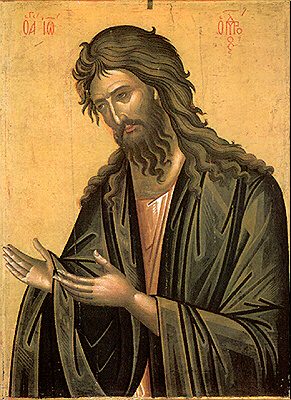
John the Baptist: Witness to Christmas
There came a man sent from God, whose name was John. He came as a witness, to testify about the Light, so that all might believe through him. He was not the Light, but he came to testify about the Light (John 1:6-8).
We don’t often think of John the Baptist when thinking of Christmas. As far as I know, there are no Christmas hymns dedicated to him, he does not appear in the manger scene, and he does not appear in any Christmas play that I’ve seen. But in the observance of Advent, the person and message of John the Baptist is significant in our preparation for the celebration of Christmas.
Remembering St. Nicholas
Have you ever wondered where the traditions associated with the celebration of Christmas began? Some of the traditions regarding Christmas are not found in the Scriptures, but come to us from a long history of the Christian faith. One such tradition is the legend of Santa Claus.