
Men and Women in the Image of God
Anthropology, the study of humanity, is the current rage among theologians of all persuasions. On the left, Feminist theologians view the bible with suspicion, the product of a powerful patriarchy intent on the perpetual subjugation of women. Queer theologians seek to redefine humanity by blurring distinctions of sexuality. On the right, some conservative theologians (Protestant, Catholic and male) insist that the world, and the church, is the domain of men. God created men to rule, women to submit.
Continue reading “Men and Women in the Image of God”




The Sacred Scriptures are self-authenticating
The movie The Book of Eli is the story of a post-apocalyptic world in which humanity is reduced to anarchy and cannibalism.
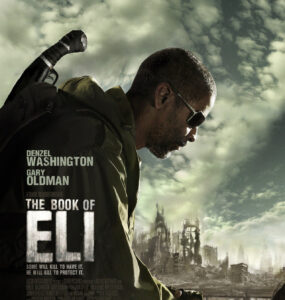
Eli (played by Denzel Washington) is a man on a journey, guided by a voice, with the mission of protecting a mysterious book. The antagonist is Carnegie (played by Gary Oldman) who is looking for a single copy of the mysterious book. For Eli, the book symbolizes hope; for Carnegie, the book is a tool of power. Both men hold the Bible dear to their hearts. I found the movie to be a powerful commentary on the nature of humanity and Sacred Scripture.
Continue reading “The Sacred Scriptures are self-authenticating”

We believe in the verbal inspiration of the Bible
This is the first statement of the Church of God Declaration of Faith. Earlier creeds began with a statement about God: “I believe in God the Father Almighty, Creator of heaven and earth”. But like many creeds of the early twentieth century, the Declaration of Faith first establishes the Holy Scripture as the foundation of all theological reflection.
Continue reading “We believe in the verbal inspiration of the Bible”
Is there a place for Lent in Pentecostalism?
In recent years, many Pentecostals started a new tradition – beginning the new year with a twenty-one day fast. Long before this became a common practice, I was introduced to Lent, the practice of fasting 40 days in solidarity with Jesus’ journey towards the cross. Continue reading “Is there a place for Lent in Pentecostalism?”
Is Church Decline Inevitable?
The decline of Methodism has been a theme in Pentecostal churches for decades. As a teenager in the Church of God in the 1970s, I recall our pastor warning that the Church of God was going the way of Methodism. In fact, the two scapegoats among most campmeetng preachers were the lukewarm Methodists and the apostate Catholics. Both were roundly accused of holding to a form of godliness, but denying the power thereof. For the moment, let’s talk about the Methodists and why there is hope for the future of Methodism, and Pentecostalism.
Continue reading “Is Church Decline Inevitable?”
It’s time to read our Practical Commitments again
The Church of God has always sought to faithfully proclaim and live the Gospel of God’s kingdom. These dual commitments express a holistic spirituality that is demonstrated in personal holiness and social holiness. The first “teaching that is made prominent” of the Church of God were published in The Evening Light and Church of God Evangel (15 August 1910), adopted by the General Assembly in 1911, and published in the Minutes of the General Assembly in 1912. The “teachings” were reaffirmed and amended by the General Assembly periodically. The 68th General Assembly revised the practical commitments in 1988.
Continue reading “It’s time to read our Practical Commitments again”