Grace for Sexual Sin

I’ve learned some things about sin: (1) all have sinned; (2) we are often happy to talk about someone else’s sin; (3) those sins that directly affect us tend to get overlooked, or excused; and (4) eventually we stop talking about sin because we are uncomfortable with our sinfulness, and we don’t want to be accused of being judgmental toward others. This is especially true when it comes to sexual sin. However, the truth remains that sin is the condition of humanity – all of us. And, there is a remedy for sin.

Continue reading “Grace for Sexual Sin”

FacebooktwitterFacebooktwitter

The President, Homosexuality, and the Log in our Eye

“For in the way you judge, you will be judged; and by your standard of measure, it will be measured to you. Why do you look at the speck that is in your brother’s eye, but do not notice the log that is in your own eye?Or how can you say to your brother, ‘Let me take the speck out of your eye,’ and behold, the log is in your own eye? You hypocrite, first take the log out of your own eye, and then you will see clearly to take the speck out of your brother’s eye” (Matthew 7:2-5).

OK, so the President supports homosexual marriage (no surprise here). All over the Internet I’ve read posts, blogs, articles, Facebook conversations, etc. of Christians tripping over themselves trying to be fair, sensitive, discerning, and tolerant. When the citizens of North Carolina voted overwhelmingly to reject homosexual marriage, some Christians suggested that because of an increasingly pluralistic society it is inappropriate to “coerce” through legislation a morality that is derived from our faith tradition. To that I would reply that the purpose of all legislation is to encourage or “coerce” civic morality, and civic morality should reflect the highest good.

Continue reading “The President, Homosexuality, and the Log in our Eye”

FacebooktwitterFacebooktwitter

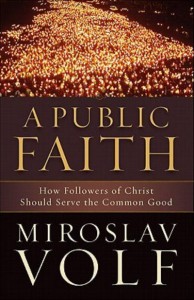
A PUBLIC FAITH: A Review

Miroslav Volf, A Public Faith: How Followers of Christ Should Serve the Common Good (Grand Rapids: Brazos Press, 2011). 175 pp.

The first election in which I voted was in 1980. The nation was suffering from what President Carter called a “malaise.” Many of the political class were suggesting that the nation’s troubles were so many and so deep that the office of the President was no longer useful. The Moral Majority was exercising its political muscle and its leaders were calling for “moral leadership.” Ronald Reagan was larger than life. He embraced the religious right and the religious right embraced him. I voted for Reagan in 1980, and again in 1984. I don’t regret it.

Continue reading “A PUBLIC FAITH: A Review”

FacebooktwitterFacebooktwitter

Avoiding Toxic Leadership: Integrity and Accountability

One of the signs of toxic leadership is when the leader believes that his/her integrity is beyond scrutiny. In the church we see this all too often. In fact, the church is often a breeding ground for toxic leaders. I’m not just talking about false prophets, charlatans, and those guilty scandalous immorality. Sometimes the toxic leaders in our midst have a high moral standard, hold to doctrinal orthodoxy, and are sincere in their desire to faithfully serve Christ. The church is a fertile breeding ground for this type of toxic leadership because we tend to idolize leaders we respect and our respected leaders become too accustomed to our accolades. Also, we certainly don’t want to get the reputation of being a trouble-maker.

Continue reading “Avoiding Toxic Leadership: Integrity and Accountability”

FacebooktwitterFacebooktwitter

Granite and Grass

Easter is more than one Sunday; it’s a season in the Christian liturgical year. Jesus walked on the Earth, teaching His disciples for 40 days after the resurrection. The seven Sunday’s of Easter offer us a time to reflect upon the meaning of the resurrection, the future ministry of the Church, and the eschatological consummation of redemption.

Continue reading “Granite and Grass”

FacebooktwitterFacebooktwitter

Sacraments: An Ongoing Altar Call

The celebration of the sacraments is an ongoing altar call. For most Pentecostal churches, the altar call is the central event of the worship service. Sinners are encouraged to come forward to the altar to “pray through” to salvation. Believers are encouraged to come to the altar to pray for sanctification, or to “pray through” to the baptism in the Holy Spirit. During the altar service, those who are sick, or otherwise in need, are encouraged to come to the altar. There the church elders will anoint with oil, lay their hands upon the sick, and pray for healing. The celebration of the sacraments in Pentecostal worship should be understood as an opportunity to invite the saints of God once again to the altar to encounter the Holy Spirit in the celebration of water baptism, the Lord’s Supper, foot-washing, and the laying on of hands. Each sacrament directly corresponds to the redemptive work of the Holy Trinity. In this regard, the sacraments are an ongoing altar call in which the believer encounters God through the Holy Spirit.

Continue reading “Sacraments: An Ongoing Altar Call”

FacebooktwitterFacebooktwitter