The words of Scripture are food for the hungry soul. Even so, sometimes those words are difficult to chew.
Continue reading “Sometimes the Bible is Hard to Understand”




Reflections of an Undeconstructed Pentecostal
The words of Scripture are food for the hungry soul. Even so, sometimes those words are difficult to chew.
Continue reading “Sometimes the Bible is Hard to Understand”
I’ve read dozens of books on the Trinity. The more popular books, that is, those written for the people in the pews, are too often not very helpful in unpacking the richness of Trinitarian theology. The more academic books are often too speculative, too novel, or too dense to be helpful for most pastors and disciples of Christ.
Continue reading “Simply Trinity – A Recommendation”
In the Fall of 1978, I traveled through snow and ice in the Carolinas on my way to college – East Coast Bible College in Charlotte, NC. After graduating from high school, I had applied to, and been accepted, at Lee College, Oral Roberts University, and East Coast Bible College. I chose the small, relatively new school in Charlotte. I’ve never regretted that decision.
Continue reading “In Memory of Dr. George D. Voorhis”

St. Augustine was the Bishop of Hippo (in Northern Africa) from AD 395 – 430. Some of his Christmas sermons have been published in the Ancient Christian Writers series – St. Augustine: Sermons for Christmas and Epiphany (The Newman Press, 1952). Following are selected excerpts that summarize his Trinitarian Christology.
Listen, dearly beloved, and see what sound advice the Apostle has for us when he says: As therefore you have received Christ Jesus our Lord, walk ye in Him, rooted and built up in Him, and confirmed in the faith. With this simple and solid faith we ought to persevere in Him, that He may Himself make known to the faithful what is hidden in Him; for, as the same Apostle says, in Him are hid all the treasures of wisdom and knowledge.[1]
Continue reading “An Ancient Christmas Sermon – Augustine”
In Him was life, and the life was the Light of mankind (John 1:4).
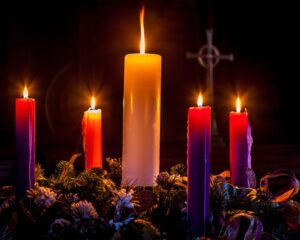
The Incarnation of the eternal Son is situated within human experience. In other words, “the Word became flesh and dwelt among us” (John 1:14) means that God experienced the fulness of human experience, and humans might experience the fulness of God. Pathos is an expression of emotion, or passion. So, to speak of the pathos of Advent is to reflect on how the coming of Christ moves us towards faith in God. The pathos of Advent is illustrated in the candles of the Advent wreath. As we moved towards the celebration of Christmas, we light a candle and reflect.
Continue reading “A Christmas Sermon: The Pathos of Advent”

Christmas is about theology. During this season of the year, we read selections of Scripture that tell the story of the Virgin conception of the Son of God. We sing hymns like O Come all Ye Faithful (Wade) that are replete with theological phrases:
Continue reading “The Theology of Christmas”
Who is the Gospel for? That may seem like a ridiculous question. And of course, the proper response is that the gospel is for everyone. The Gospel is God’s remedy for humanity disordered by sin. But a church disordered by its surrounding culture has often missed the mark in practicing the Gospel.
Continue reading “Who is the Gospel For?”